WarmFormer ™ Technology
Updated: Sep 30

Key Industries Served by the Industrial Know How
Semiconductor Wafer Manufacture
Metal Carbide
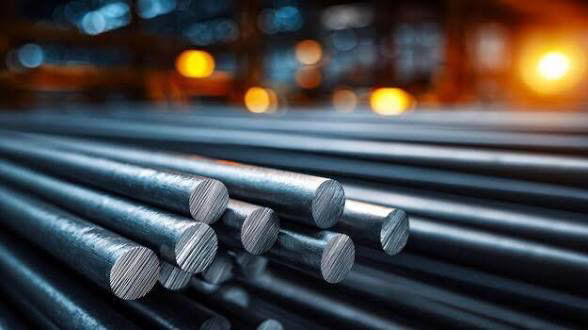
Metals, high integrity casting - stronger than turning, malleation or ducting
Glass manufacture - especially high quality soda glass
Polymerisation
Materials formation from molten or semi-molten states, overall
Semiconductor Wafer Industry
Until today, Silicon wafer production was the sole enterprise of Intel LLC.
Current Industry, Technical Status
All conventional semiconductors are made from a weakly insulating element or a non-metallic element with low capacitance. They are are doped with high pH reagents which remove electrons from the substrate to leave holes or positrons behind. It is an inorganically concentrated (toxic) and over-industrialised production process, creating great and unnecessary, unrecoverable expense.
Xerqon Pty Ltd's (Xerqon) methodology is based on a centuries old art from - cake/pudding baking.
For following pressure differentials, see the Xerqon blog site article 'Helix Turbine'™ - The Greatest Power To Weight Ratio Fluid Compressor.
Geometric Lattice Promotion
All it takes to produce smooth, high coherence substrate with optimum, geometric lattice formation is higher pressure cooling environment. That occurs post-forge - and lowering its latent heat capacity at a temperature always equal to the temperature of the molten or semi-molten substrate allows for formation approaching perfection.
Warm-Former or Rapid Reaction Crucible
The technique or know how, above, is applicable to all solid substrate which can be formed or moulded from a molten state, including glass. Undoped soda glass will for a superior lattice to doped crystal glass if cooled via this methodology.
High pressure for a multiples of mass orders of magnitude more than the pressure increase is a necessary factory component. At that stage that proportional organisation guarantees more rapid formation. That is when warm forming gives way to hot forming.
An outflow pump and valve system in a pressure chamber would be an important feature. It would allow for chamber atmosphere to be pumped out of the vault, under high temperature. That would accommodate a depressurisation of the molten substance to release air pockets or bubbles at maximum rapidity. The substance must be cooled to mid temperature before the next set of valves and reverse configuration pump take over the ‘warm-forming’ function.
It is conducted under the pressure required to maintain atmospheric temperature to match substrate temperature from its radiant heat. That would require a hermetically sealed environment or chamber. It must house a set of spring loaded pressure valves. They will allow restorative pressure to be pumped into the chamber by a pump or array of the same, behind the one-way inlet valves.
Hardened Glass & Metal Casting
Glass will form to the crystalline most refined on the market - of greater quality than today's homewares crystal. For metals their quality increase, with no bubbling of spherical or ducted, elongated bubbles, will be their supreme hardness for any given element, alloy or semiconductor (eg. metal carbide).
High quality soda glass would be well placed as replacement for metal hearths if at least four inches thick and doped, the outer surface, with natural earth materials, for decorative effect. With convection generated by the rising heat, at the back of the fire, and falling cool air at the front of the fire, the glass would be thermally protected. Only radiant heat would permeate the glass. Thermal breakage is further reduced by placing a semi-evacuated air gap between two layers of glass. That is all significantly safer than gas piping in the fire place.
Reverse Pressure Chamber
Polymers perform better at room temperature or at lower heat levels - also achieving in a lower pressure environment where the pressure valves would be outlet valves. They would be controlled, similarly, by a piston or piston array.
Reverse pressure promotes liberation of fluids (liquids and gases) early in the manufacturing process. It is followed by high pressure formation.
Commercial Outlook
'Hot' formation of materials technology has never offered so much commercialisable industry promise with so little required cost.
© Xerqon ABN 97661410108 2025


Comments